
Comparative And Critical Review About Thiazole Derivatives In Diabetic Patients, Hepatic Versus Pancreatic Effects
DOI:
https://doi.org/10.51173/ijmhs.v2i2.59Keywords:
Thiazole, Liver, Pancreas, Diabetes, Oxidative StressAbstract
Background: Thiazole and its derivatives have a wide positive effect in treating diabetes, but studies comparing the extent of the effect of these compounds on each organ are still limited.
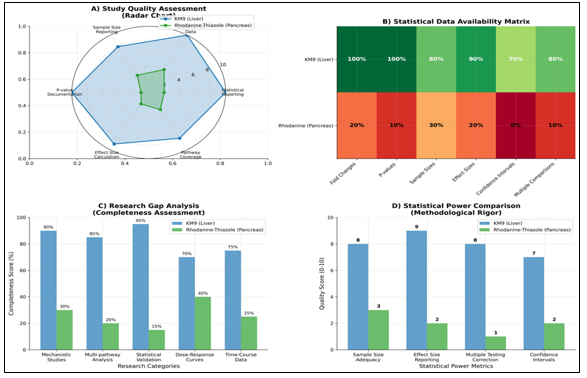
Objective of study: The current research aimed to compare effectiveness and the mechanisms by which Thiazole and their derivatives compounds exert effects on pancreatic versus hepatic pathways, integrating mechanistic and clinical findings with translational observations to guide dual-pathway drug design.
Materials and Methods: Non-systematic qualitative review of in vitro, in vivo, clinical, and in silico research (2000–2024), evaluating strengths, weaknesses, safety outcomes, and knowledge gaps. PubMed, Scopus, and Web of Science databases were searched.
Results: Pancreatic derivatives achieved satisfactory glycemic control (↑ insulin up to 4-fold; ↓ glucose up to 35.9%) and β-cell protection with greater variability. Hepatic drugs presented more enduring changes (↑ C-peptide to 48.6%; enhanced insulin sensitivity; lowered ALT, AST, MDA; raised SOD, CAT, GSH). Liver-targeted therapies have stronger clinical evidence, and pancreatic therapies have more conclusive mechanistic evidence but with smaller populations. Safety profiles, toxicity, and tolerability were less consistently reported and should be more standardized in their measurement.
Conclusion: Previous studies have recorded evidence of cross-effects caused by thiazole and its derivatives on humans, showing a rapid response in the pancreas manifested by a decrease in blood sugar levels, and a slow response in the liver to achieve metabolic stability. Therefore, it is recommended to follow a strategy that represents both pathways, measured by a set of biomarkers and subjected to strict evaluations, as well as long-term studies on the liver and pancreas. Future experiments can establish the fundamentals for utilizing drugs in which thiazole is a key component to improve treatment and reduce side effects and long-term outcomes.
References
References
Resende, M. F. D., Lino, C. I., Souza-Fagundes, E. M. D., Rettore, J. V. P., Oliveira, R. B. D., & Labanca, R. A. (2019). Assessment of anti-diabetic activity of a novel hydrazine-thiazole derivative: in vitro and in vivo method. Brazilian Journal of Pharmaceutical Sciences, 55, e18218. http://dx.doi.org/10.1590/s2175-97902019000118218.
Lu, X., Xie, Q., Pan, X., Zhang, R., Zhang, X., Peng, G., ... & Tong, N. (2024). Type 2 diabetes mellitus in adults: pathogenesis, prevention and therapy. Signal transduction and targeted therapy, 9(1), 262. https://doi.org/10.1038/s41392-024-01951-9.
Han, H. S., Kang, G., Kim, J. S., Choi, B. H., & Koo, S. H. (2016). Regulation of glucose metabolism from a liver-centric perspective. Experimental & molecular medicine, 48(3), e218-e218.https://doi.org/10.1038/emm.2015.122.
Singh, G., Kumar, R., DS, D., Chaudhary, M., Kaur, C., & Khurrana, N. (2024). Thiazolidinedione as a promising medicinal scaffold for the treatment of type 2 diabetes. Current Diabetes Reviews, 20(6), 89-109. https://doi.org/10.2174/0115733998254798231005095627.
Kabir, E., & Uzzaman, M. (2022). A review on biological and medicinal impact of heterocyclic compounds. Results in Chemistry, 4, 100606. https://doi.org/10.1016/j.rechem.2022.100606.
Onoja, S. O., Nnadi, C. O., Udem, S. C., & Anaga, A. O. (2020). Potential antidiabetic and antioxidant activities of a heliangolide sesquiterpene lactone isolated from Helianthus annuus L. leaves. Acta Pharmaceutica, 70(2), 215-226. https://doi.org/10.2478/acph-2020-0019.
Sun, H., Saeedi, P., Karuranga, S., Pinkepank, M., Ogurtsova, K., Duncan, B. B., ... & Magliano, D. J. (2022). IDF Diabetes Atlas: Global, regional and country-level diabetes prevalence estimates for 2021 and projections for 2045. Diabetes research and clinical practice, 183, 109119. DOI: 10.1016/j.diabres.2021.109119.
Khatik, G. L., Datusalia, A. K., Ahsan, W., Kaur, P., Vyas, M., Mittal, A., & Nayak, S. K. (2018). A retrospect study on thiazole derivatives as the potential antidiabetic agents in drug discovery and developments. Current drug discovery technologies, 15(3), 163-177. DOI:10.2174/1570163814666170915134018.
Shaheen, N., Shaheen, A., Ramadan, A., Hefnawy, M. T., Ramadan, A., Ibrahim, I. A., ... & Flouty, O. (2023). Appraising systematic reviews: a comprehensive guide to ensuring validity and reliability. Frontiers in research metrics and analytics, 8, 1268045. https://doi.org/10.3389/frma.2023.1268045.
Song, Y., Li, J., & Wu, Y. (2024). Evolving understanding of autoimmune mechanisms and new therapeutic strategies of autoimmune disorders. Signal Transduction and Targeted Therapy, 9(1), 263. https://doi.org/10.1038/s41392-024-01952-8.
Dabrowska, A., & Thaul, S. (2018). How FDA approves drugs and regulates their safety and effectiveness. Washington: Congressional Research Service, 1-25. Retrieved from https://www.fda.gov/drugs/information-consumers-and-patients-drugs/fdas-drug-review-process-ensuring-drugs-are-safe-and-effective.
Yoo, J. H., & Kim, J. H. (2023). Advances in continuous glucose monitoring and integrated devices for management of diabetes with insulin-based therapy: improvement in glycemic control. Diabetes & metabolism journal, 47(1), 27-41.https://doi.org/10.4093/dmj.2022.0271.
Latres, E., Finan, D. A., Greenstein, J. L., Kowalski, A., & Kieffer, T. J. (2019). Navigating two roads to glucose normalization in diabetes: automated insulin delivery devices and cell therapy. Cell metabolism, 29(3), 545-563. https://doi.org/10.1016/j.cmet.2019.02.003.
Yasmin, S., Capone, F., Laghezza, A., Piaz, F. D., Loiodice, F., Vijayan, V., ... & Lavecchia, A. (2017). Novel benzylidene thiazolidinedione derivatives as partial PPARγ agonists and their antidiabetic effects on type 2 diabetes. Scientific Reports, 7(1), 14453. https://doi.org/10.1038/s41598-017-13809-7.
Ali, I. H., Hassan, R. M., El Kerdawy, A. M., Abo-Elfadl, M. T., Abdallah, H. M., Sciandra, F., & Ghannam, I. A. (2024). Novel thiazolidin-4-one benzenesulfonamide hybrids as PPARγ agonists: Design, synthesis and in vivo anti-diabetic evaluation. European journal of medicinal chemistry, 269, 116279. https://doi.org/10.1016/j.ejmech.2024.116279.
Yen, F. S., Yang, Y. C., Hwu, C. M., Wei, J. C. C., Huang, Y. H., Hou, M. C., & Hsu, C. C. (2020). Liver‐related long‐term outcomes of thiazolidinedione use in persons with type 2 diabetes. Liver International, 40(5), 1089-1097. https://doi.org/10.1111/liv.14385.
Xiang, A. H., Peters, R. K., Kjos, S. L., Marroquin, A., Goico, J., Ochoa, C., ... & Buchanan, T. A. (2006). Effect of pioglitazone on pancreatic β-cell function and diabetes risk in Hispanic women with prior gestational diabetes. Diabetes, 55(2), 517-522. https://doi.org/10.2337/diabetes.55.02.06.db05-1066.
Yen, F. S., Yang, Y. C., Hwu, C. M., Wei, J. C. C., Huang, Y. H., Hou, M. C., & Hsu, C. C. (2020). Liver‐related long‐term outcomes of thiazolidinedione use in persons with type 2 diabetes. Liver International, 40(5), 1089-1097. doi: 10.1111/liv.14385.
Buchanan, T. A., Xiang, A. H., Peters, R. K., Kjos, S. L., Marroquin, A., Goico, J., ... & Azen, S. P. (2002). Preservation of pancreatic β-cell function and prevention of type 2 diabetes by pharmacological treatment of insulin resistance in high-risk Hispanic women. Diabetes, 51(9), 2796-2803. https://doi.org/10.2337/diabetes.51.9.2796.
Musso, G., Gambino, R., Cassader, M., & Pagano, G. (2010). A meta‐analysis of randomized trials for the treatment of nonalcoholic fatty liver disease. Hepatology, 52(1), 79-104. https://doi.org/10.1002/hep.23623.
DeFronzo, R. A., & Abdul-Ghani, M. A. (2011). Preservation of β-cell function: the key to diabetes prevention. The Journal of Clinical Endocrinology & Metabolism, 96(8), 2354-2366. https://doi.org/10.2337/db11-0006.
Pendse, A. A. (2010). Peroxisome Proliferator Activated Receptor-gamma P465L Point Mutation in Diabetes and Atherosclerosis. https://doi.org/10.17615/x7ga-pc55.
Teranishi, T., Ohara, T., Maeda, K., Zenibayashi, M., Kouyama, K., Hirota, Y., ... & Kasuga, M. (2007). Effects of pioglitazone and metformin on intracellular lipid content in liver and skeletal muscle of individuals with type 2 diabetes mellitus. Metabolism, 56(10), 1418-1424. https://doi.org/10.1016/j.diabres.2017.06.006.
Galal-Khallaf, A., Mousa, D., Atyah, A., El-Bahnsawye, M., Hussein, M. K. A., El Sayed, I. E. T., Elmongy, E. I., Binsuwaidan, R., El-Torgoman, A. M. A. K., Abdel-Bary, H., & Mohammed-Geba, K. (2025). In Vivo Antidiabetic and Antilipidemic Effect of Thiazolidine-2,4-Dione Linked Heterocyclic Scaffolds in Obesity-Induced Zebrafish Model. Pharmaceuticals, 18(7), 1023. https://doi.org/10.3390/ph18071023.
Sharma, D., Kumar, M., & Das, P. (2021). Application of cyclohexane-1, 3-diones for six-membered oxygen-containing heterocycles synthesis. Bioorganic Chemistry, 107, 104559. https://doi.org/10.1016/j.bioorg.2021.104559.
Downloads
Published
How to Cite
Issue
Section
License
Copyright (c) 2025 Israa M. Ali alameen, Abdullah Safar Althubiani

This work is licensed under a Creative Commons Attribution 4.0 International License.