Evaluation of the Effect of Potassium Fluoride Addition on Surface Roughness and Surface Hardness of Acrylic Resin Material
DOI:
https://doi.org/10.51173/ijmhs.v1i1.6Keywords:
Acrylic Resin, Potassium Fluoride, Surface Hardness, Surface RoughnessAbstract
Background: Acrylic is currently the most popular material for dental prosthesis fabrication. Fluoridated denture base resins have shown more stable properties such as decreased water sorption, good stain resistance, and solubility when compared to conventional ones. Fluoride addition may improve their properties.
Objective of study: Analyze how adding potassium fluoride (2% and 5%) affects the heat-cured acrylic resin material's surface roughness and hardness.
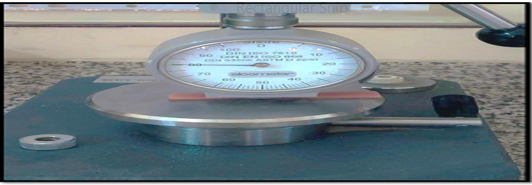
Materials and Methods: Testing on sixty heat-cured acrylic resin samples revealed that the samples were divided into two main groups: thirty samples were tested for surface roughness and thirty samples for surface hardness. Each group was divided into three groups: the control group, which included ten heat acrylic resin specimens in any combination, and the other two groups, which included ten heat acrylic resin specimens plus 2% potassium fluoride, and ten heat acrylic resin specimens combined with 5% potassium fluoride. The surface roughness and hardness specimens were prepared with the following dimensions: 65 mm x 10 mm x 2.5 mm, respectively. Elcometer (shore D, Germany) and profilometer tester (Time 3200/TR200, China) were employed for the evaluated hardness and surface roughness tests, respectively.
Results: The surface hardness test findings showed no statistically significant differences between the study groups; however, surface roughness test results revealed differences that were statistically significant across all study groups at P< 0.05.
Conclusion: The addition of 2% and 5% potassium fluoride to heat-cured acrylic resin materials produced no effect on surface hardness but it influenced the roughness test.
References
Braden, M. (1988). Some aspects of the chemistry and physics of dental resins. Advances in Dental Research, 2(1), 93-97. https://doi.org/10.1177/08959374880020012601.
Dixon, D. L., Ekstrand, K. G., & Breeding, L. C. (1991). The transverse strengths of three denture base resins. The Journal of Prosthetic Dentistry, 66(4), 510-513. https://doi.org/10.1016/0022-3913(91)90514-W.
Radford, D. R., Sweet, S. P., Challacombe, S. J., & Walter, J. D. (1998). Adherence of Candida albicans to denture-base materials with different surface finishes. Journal of dentistry, 26(7), 577-583. https://doi.org/10.1016/S0300-5712(97)00034-1.
Guler, A. U., Yilmaz, F., Kulunk, T., Guler, E., & Kurt, S. (2005). Effects of different drinks on stainability of resin composite provisional restorative materials. The Journal of prosthetic dentistry, 94(2), 118-124. https://doi.org/10.1016/j.prosdent.2005.05.004.
Hayakawa, I., Akiba, N., Keh, E., & Kasuga, Y. (2006). Physical properties of a new denture lining material containing a fluoroalkyl methacrylate polymer. The Journal of prosthetic dentistry, 96(1), 53-58. https://doi.org/10.1016/j.prosdent.2006.05.012.
Imazato, S., Ikebe, K., Nokubi, T., Ebisu, S., & Walls, A. W. G. (2006). Prevalence of root caries in a selected population of older adults in Japan. Journal of Oral Rehabilitation, 33(2), 137-143. https://doi.org/10.1111/j.1365-2842.2006.01547.x.
Jensen, M. E., & Kohout, F. (1988). The effect of a fluoridated dentifrice on root and coronal caries in an older adult population. The Journal of the American Dental Association, 117(7), 829-832. https://doi.org/10.14219/jada.archive.1988.0128.
Han, L., Cv, E., Li, M., Niwano, K., Ab, N., Okamoto, A., & Iwaku, M. (2002). Effect of fluoride mouth rinse on fluoride releasing and recharging from aesthetic dental materials. Dental materials journal, 21(4), 285-295. https://doi.org/10.4012/dmj.21.285.
Rashid, A. A. L. (2014). Effect of sodium fluoride on the properties of acrylic resin denture base material subjected to long-term water immersion. Journal of Baghdad college of dentistry, 26(4), 14-21.
Alnamel, H. A., & Mudhaffer, M. (2014). The effect of Silicon di oxide Nano-Fillers reinforcement on some properties of heat cure polymethyl methacrylate denture base material. Journal of baghdad college of dentistry, 325(2212), 1-5.
Powers, J. M., & Wataha, J. C. (2012). Dental materials-E-book: properties and manipulation. Elsevier Health Sciences.
Cunha, T. R., Regis, R. R., Bonatti, M. R., & Souza, R. F. D. (2009). Influence of incorporation of fluoroalkyl methacrylates on roughness and flexural strength of a denture base acrylic resin. Journal of Applied Oral Science, 17, 103-107. https://doi.org/10.1590/S1678-77572009000200006.
LatifRashid, A. A., & Noor, A. A. (2021). Evaluating the effect of artemisia aerial parts extracts on candida albicans growth and shear bond strength of soft denture liner. Journal of Techniques, 3(2). hppts://DOI.org/10.51173/jt.v3i2.321.
Hasan, W. Y., & Ali, M. M. (2018). Evaluation of thermal conductivity and some other properties of heat cured denture soft liner reinforced by halloysite nanotubes. Biomedical & Pharmacology Journal, 11(3), 1491. DOI : https://dx.doi.org/10.13005/bpj/1516.
Al‐Bakri, I. A., Harty, D., Al‐Omari, W. M., Swain, M. V., Chrzanowski, W., & Ellakwa, A. (2014). Surface characteristics and microbial adherence ability of modified polymethylmethacrylate by fluoridated glass fillers. Australian Dental Journal, 59(4), 482-489. https://doi.org/10.1111/adj.12218.
Atallah, W., AlFuraiji, N., & Hussein, O. H. (2023). Nanocomposites for prosthetic dental technology: a systemic review. Journal of Techniques, 5(1), 129-136. https://doi.org/10.51173/jt.v5i1.1178.
Axe, A. S., Varghese, R., Bosma, M., Kitson, N., & Bradshaw, D. J. (2016). Dental health professional recommendation and consumer habits in denture cleansing. The Journal of prosthetic dentistry, 115(2), 183-188. https://doi.org/10.1016/j.prosdent.2015.08.007.
Jm, P. (2006). Craig's restorative dental materials. Mechanical properties, 51-96.
Ali, A. (2014). Evaluation of the effect of sodium fluoride addition on some mechanical properties of heat cure acrylic denture base materials. J. Baghdad Coll. Dent, 26, 9-13.
Downloads
Published
How to Cite
Issue
Section
License
Copyright (c) 2025 Noor Abdul Sahib Abass, Amal Abdul Latif Rashid, Fahad Hussain Alhamoudi

This work is licensed under a Creative Commons Attribution 4.0 International License.